Licence classes
Which licence class do you need?
Not all driving licences are the same. In Zambia, your licence class determines what you're legally allowed to drive. Here's a plain-language guide to Class B, C1, and C — what each one covers, who it's for, and how to get started.
RTSA-Aligned Information · Dated & Reviewed · Plain Language · No Jargon
Looking for training specifically? Class B driving school in Lusaka · Class C1 & C
At a glance
Zambia's licence classes at a glance.
RTSA has realigned Zambia's driving licence classes to align with regional standards. Here's what that means for you.
| Class | What You Can Drive | Vehicle Examples | Typical Use |
|---|---|---|---|
| Class B | Motor vehicle up to 3,500 kg GVM, with trailer under 750 kg | Sedans, SUVs, small vans, minibuses | Personal driving, family car |
| Class C1 | Goods vehicle over 3,500 kg but under 7,500 kg GVM | Light trucks, delivery vans, small lorries | Professional driving, delivery |
| Class C | Goods vehicle over 7,500 kg GVM | Heavy trucks, rigid lorries | Professional heavy goods driving |
Source: RTSA TTTFP Driving Licence Public Notice. Last reviewed: 2026-10-12.
This table covers the most common classes for Roadstar students. Other classes (A, A1, BE, C1E, CE, D, D1) exist for motorcycles, articulated vehicles, and passenger buses. Contact us if you're unsure which class applies to you.
Class B
Class B — The Standard Driving Licence
The licence most people start with.
What it covers
A motor vehicle with a Gross Vehicle Mass (GVM) of 3,500 kg or less, with a trailer under 750 kg.
Vehicles you can drive
- Sedans and hatchbacks
- SUVs and station wagons
- Small vans and pickups
- Minibuses (under 3,500 kg GVM)
- Automatic and manual transmission vehicles
Who is this for?
This is the standard licence for personal driving. If you want to drive a family car, your own vehicle, or a company car, this is the class you need.
What you need to qualify
- Minimum age: 18 years
- Valid NRC or passport
- Medical certificate from a government hospital
- Pass the RTSA theory test
- Complete practical training
- Pass the RTSA practical test
Roadstar course path
- Class B — Beginner / Full course (20 days) — K2,600
- Class B — Standard course (15 days) — K2,450
- Class B — Half course (10 days) — K2,250
- Class B — Refresher (7 days) — K1,950
- Class B — Test preparation (1 days) — K800
Class C1
Class C1 — Light Commercial Vehicle Licence
For professional drivers who need more than a Class B.
What it covers
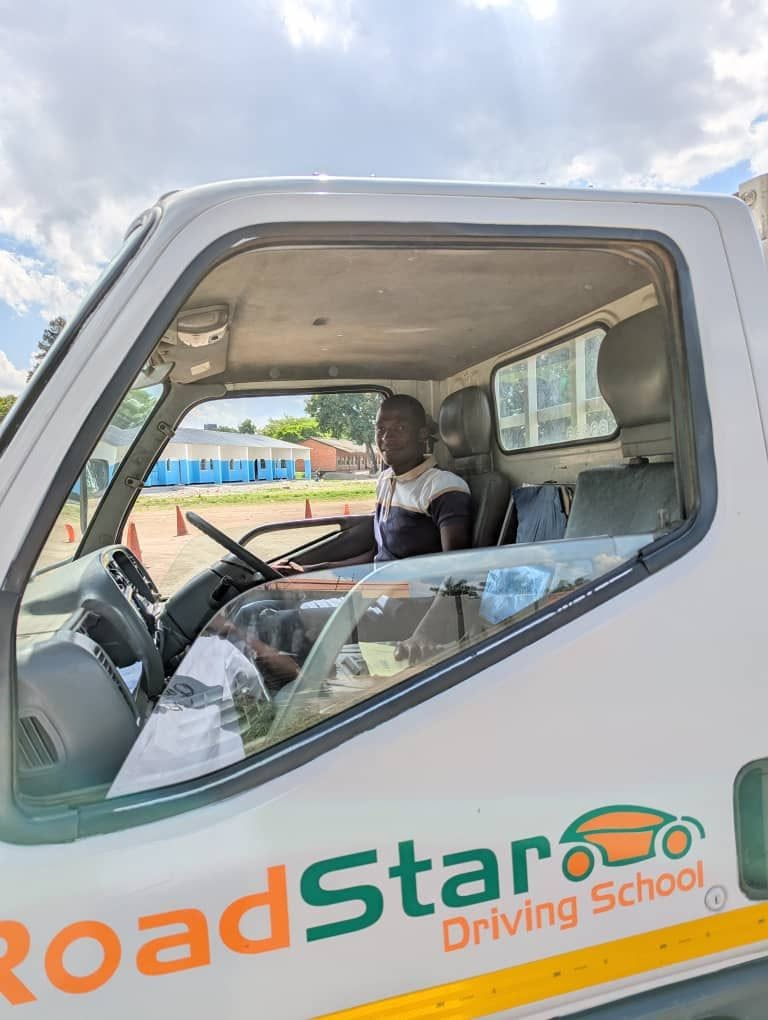
A goods vehicle with a GVM greater than 3,500 kg but less than 7,500 kg, with a trailer under 750 kg.
Vehicles you can drive
- Light trucks (e.g., Canter, small lorries)
- Delivery vans over 3,500 kg
- Goods vehicles under 7,500 kg GVM
Who is this for?
This is for professional drivers who need to operate light commercial vehicles. If you're working in delivery, logistics, or transport, this is often the required class.
What you need to qualify
- Hold a valid Class B licence
- Minimum age: 25 years (for professional driving)
- Medical certificate
- Pass the RTSA theory and practical tests for Class C1
Roadstar course path
- Class D / C1 — Beginner / Full course (20 days) — K3,500
- Class D / C1 — Standard course (15 days) — K3,200
- Class D / C1 — Half course (10 days) — K2,950
- Class D / C1 — Refresher (7 days) — K2,550
- Class D / C1 — Test preparation (1 days) — K1,200
Class C
Class C — Heavy Goods Vehicle Licence
For heavy truck and large vehicle operators.
What it covers
A goods vehicle with a GVM greater than 7,500 kg, with a trailer under 750 kg.
Vehicles you can drive
- Heavy trucks and rigid lorries
- Large goods vehicles over 7,500 kg GVM
Who is this for?
This is for experienced professional drivers who operate heavy goods vehicles. It's often required for long-haul trucking, construction transport, and heavy logistics.
What you need to qualify
- Hold a valid Class B licence
- Minimum age: 25 years
- Medical certificate
- Significant professional driving experience
- Pass the RTSA theory and practical tests for Class C
Roadstar course path
- Class C — Beginner / Full course (20 days) — K4,500
- Class C — Standard course (15 days) — K4,300
- Class C — Half course (10 days) — K4,000
- Class C — Refresher (7 days) — K3,600
- Class C — Test preparation (1 days) — K1,200
Progression
How you progress from one class to the next.
You don't jump straight to Class C. Here's the natural progression.
- 1
Get Your Class B
The standard licence. Most drivers start here.
- 2
Gain Experience
Drive regularly. Build confidence and hours behind the wheel. Most professional paths require 2+ years of driving experience.
- 3
Choose Your Path
Class C1 → Light commercial vehicles (goods under 7,500 kg). Class C → Heavy goods vehicles (over 7,500 kg).
- 4
Professional Certification
Add endorsements as needed: PSV (public service vehicle), hazardous materials, or defensive driving certification.
RTSA process
How to get your licence — step by step.
The process is the same regardless of which class you choose. Only the training and test content differ.
01
Medical Examination
Visit a government hospital or registered clinic for a medical fitness test. This confirms you're physically capable of driving.
02
Theory Test
Apply for a provisional driving licence and sit the RTSA theory test. You need a minimum of 60% to pass for private motor vehicle classes. Study the Zambian Highway Code.
03
Provisional Licence
Once you pass the theory test, you'll be issued a provisional driving licence. This is valid for 3 months and allows you to learn under supervision.
04
Practical Training
This is where Roadstar comes in. Enrol in a course for your chosen class. Complete your practical lessons with a certified instructor.
05
Practical Test
Book your practical test with RTSA. You must complete it within the 3-month validity of your provisional licence.
06
Full Licence
After passing the practical test, apply for your full driving licence. Pay the licence printing fee and collect your card.
FAQs
Questions about licence classes
What's the difference between Class B and Class C1?
Class B is for passenger cars and light vehicles up to 3,500 kg. Class C1 is for goods vehicles over 3,500 kg but under 7,500 kg. You need a Class B licence before you can train for C1.
Can I drive a minibus with a Class B licence?
Yes, if the minibus has a GVM of 3,500 kg or less. If it exceeds 3,500 kg, you'll need a higher class.
Do I need a Class C1 or Class C for delivery driving?
It depends on the vehicle weight. Most delivery vans and light trucks fall under Class C1. Larger trucks require Class C. Check your vehicle's GVM.
How long does it take to upgrade from Class B to C1?
The training takes about 20 days with Roadstar. The full process — including RTSA tests — typically takes 1–3 months depending on scheduling.
Can I train for Class C1 or C without owning a vehicle?
Yes. Roadstar provides the training vehicle. You don't need to own a truck to get your licence.
What is the PSV endorsement?
PSV stands for Public Service Vehicle. It's an additional endorsement for drivers who carry passengers for hire (taxis, buses, minibuses). It requires additional training and a clean driving record. Contact us for details.
Do I need defensive driving certification?
Some employers require it. RTSA also requires defensive driving training for driving instructor licences. We can help you understand if you need it for your career goals.
Not sure which class you need?
Tell us what you want to drive, and we'll tell you which licence class you need. No jargon. No pressure.
Emmasdale: Plot No. 238, Vubu Road, Lusaka · Thornpark: ask us for directions